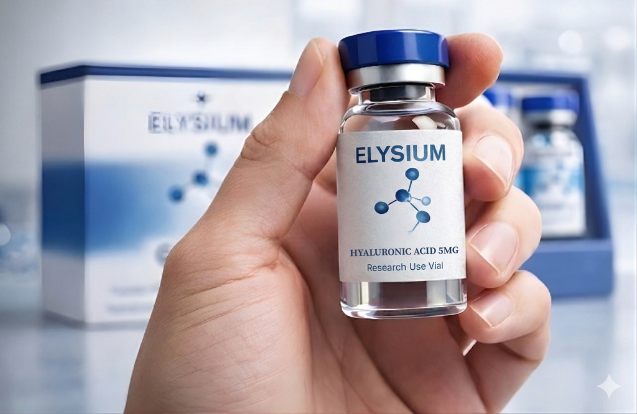
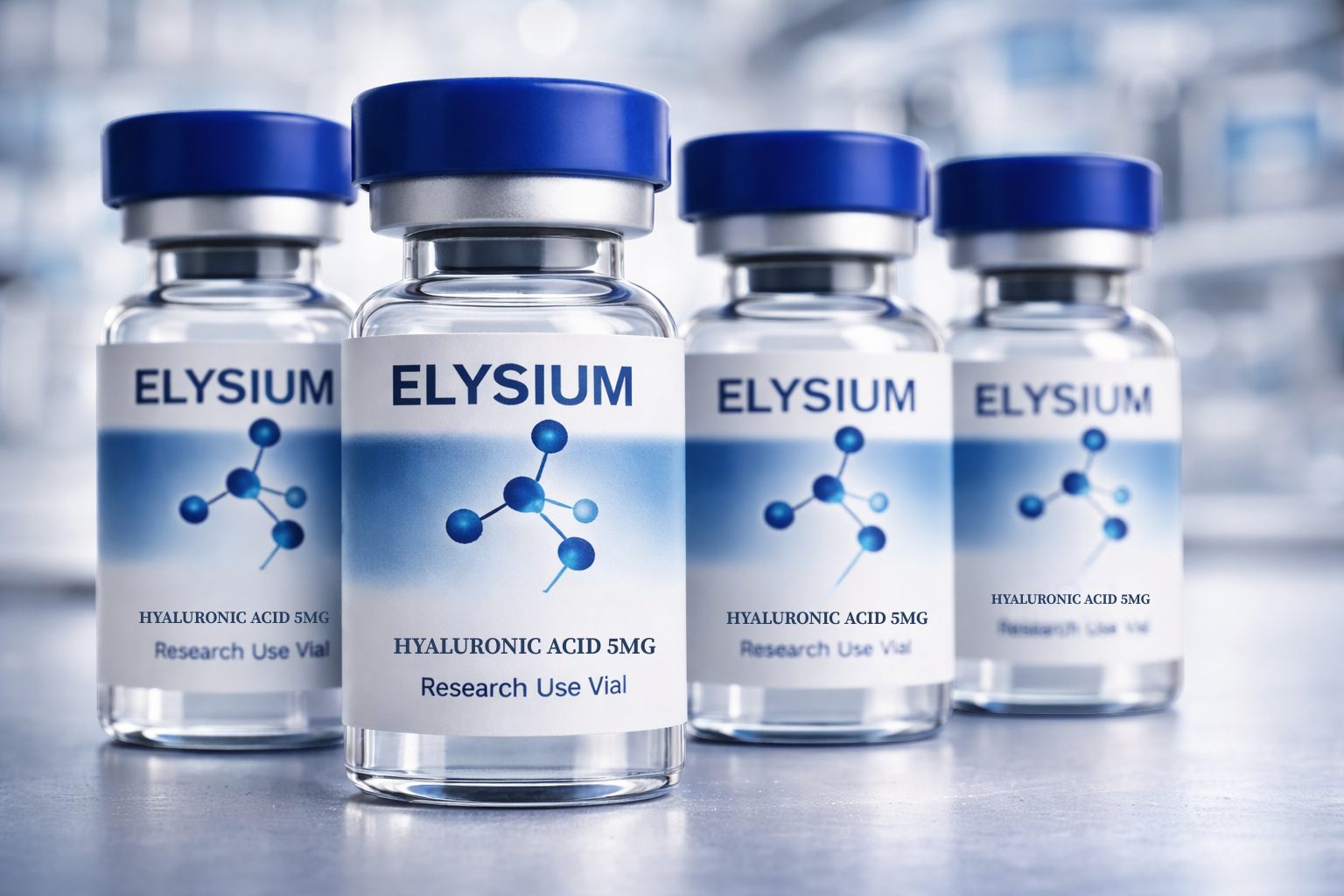

Hyaluronic Acid
Hyaluronic Acid is a naturally occurring polysaccharide (glycosaminoglycan) found throughout connective, epithelial, and neural tissues. In research environments, it is widely studied for its role in hydration, extracellular matrix support, and tissue integrity.
Within laboratory models, Hyaluronic Acid is commonly investigated for its ability to retain moisture and support structural components of skin and connective tissues, making it highly relevant in studies focused on skin elasticity, wound healing, and joint lubrication.
Researchers often explore Hyaluronic Acid in experimental settings related to cellular hydration, tissue repair, and biomechanical function, contributing to broader investigations into cosmetic science, regenerative biology, and structural tissue support.
Due to its high water-binding capacity and biological relevance, Hyaluronic Acid is frequently used in controlled laboratory studies examining skin health, joint function, and extracellular matrix dynamics.
Key Research Characteristics
- Glycosaminoglycan studied in hydration and extracellular matrix pathways
- Associated with moisture retention and tissue elasticity
- Investigated in skin health and regenerative models
- Explored in joint lubrication and connective tissue studies
- Used in experimental cosmetic and biological research
Product Specifications
Compound Name: Hyaluronic Acid
Compound Type: Glycosaminoglycan (Polysaccharide Compound)
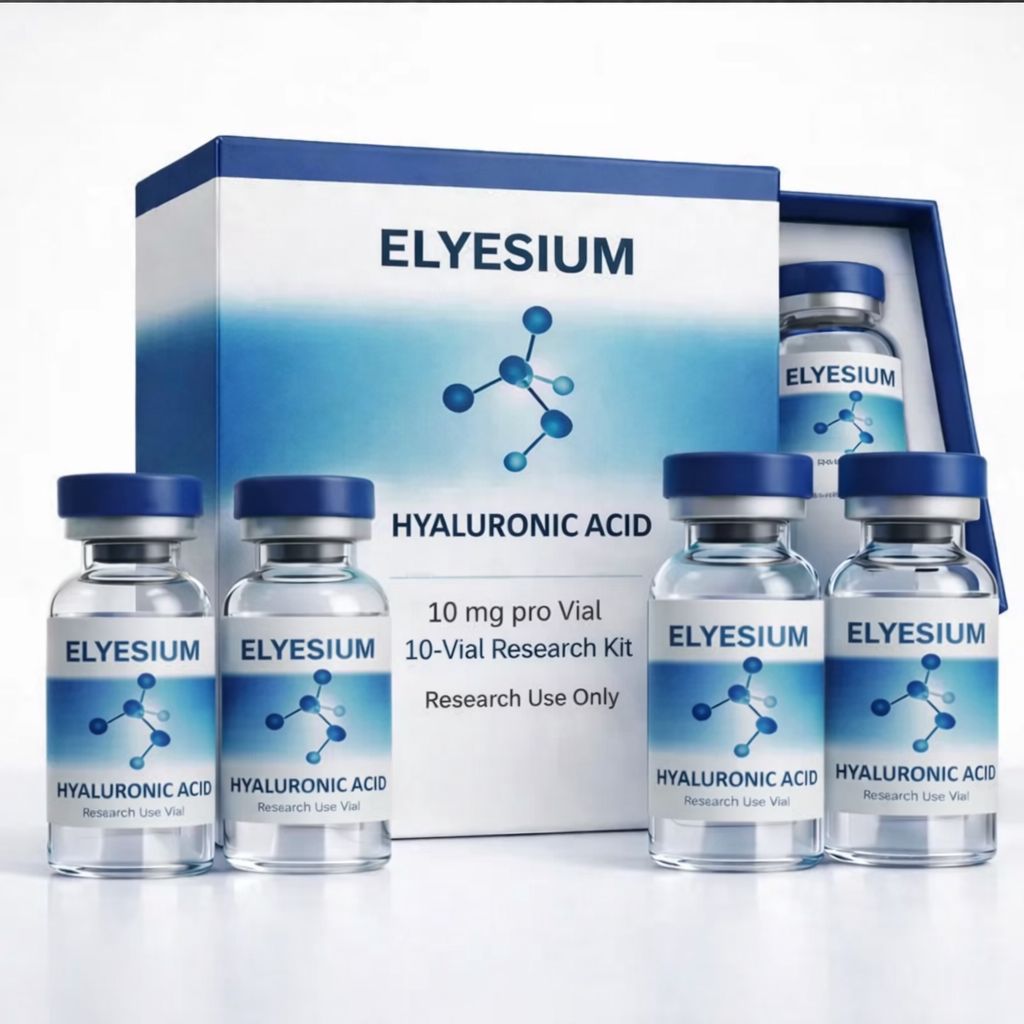
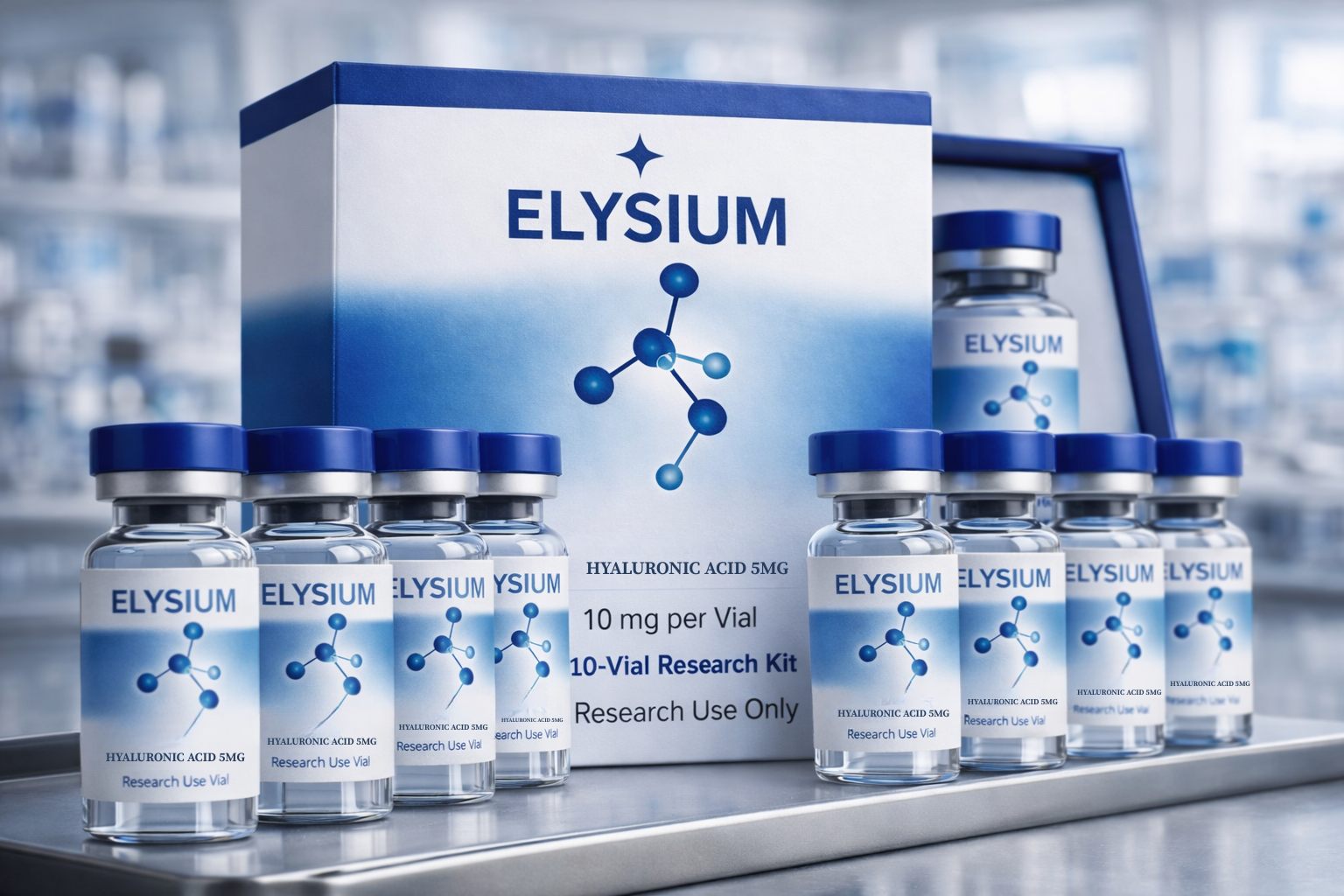
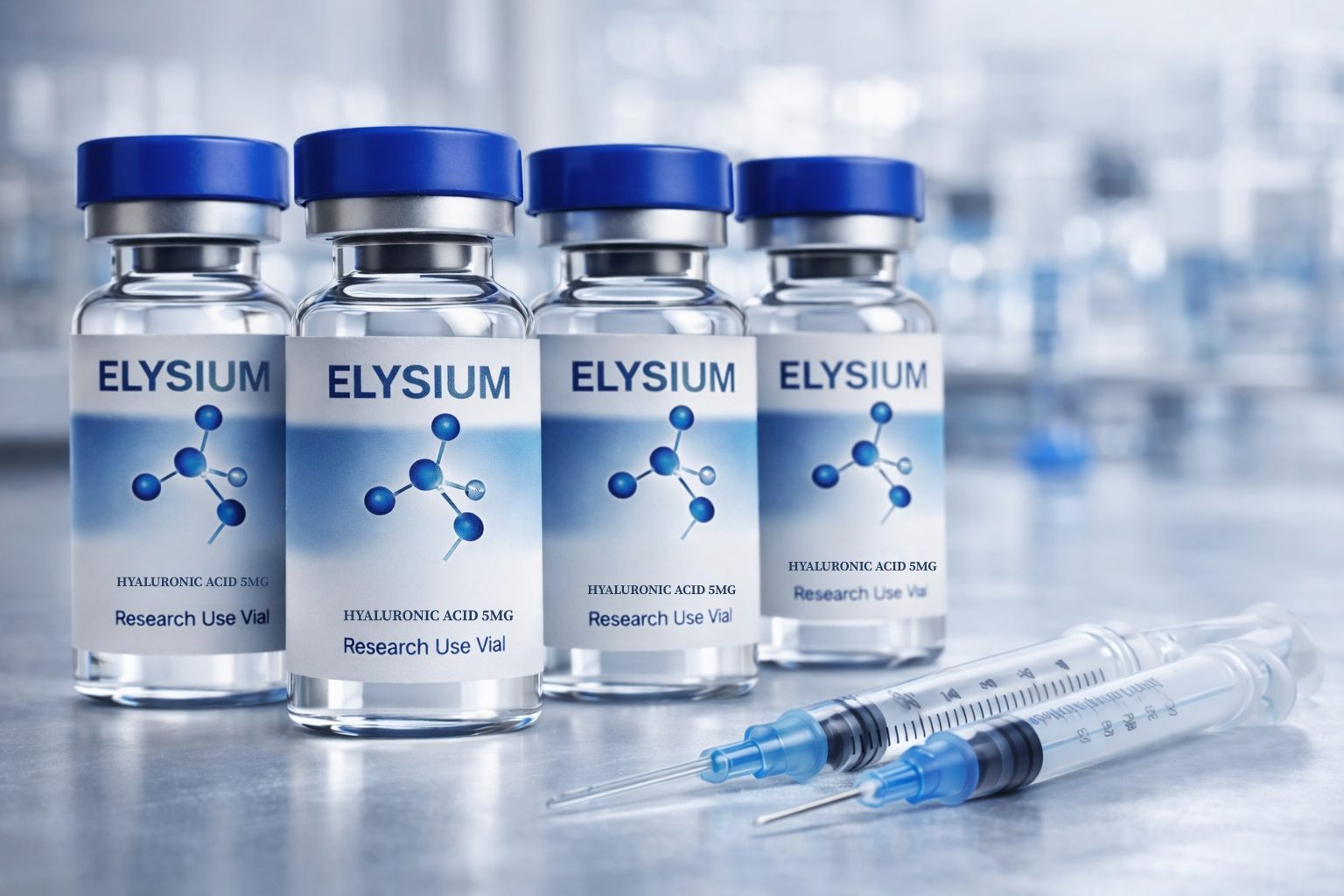
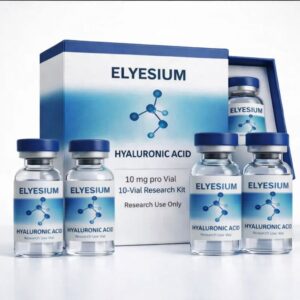
Available Vial Size: 5mg
Format: Lyophilized Powder
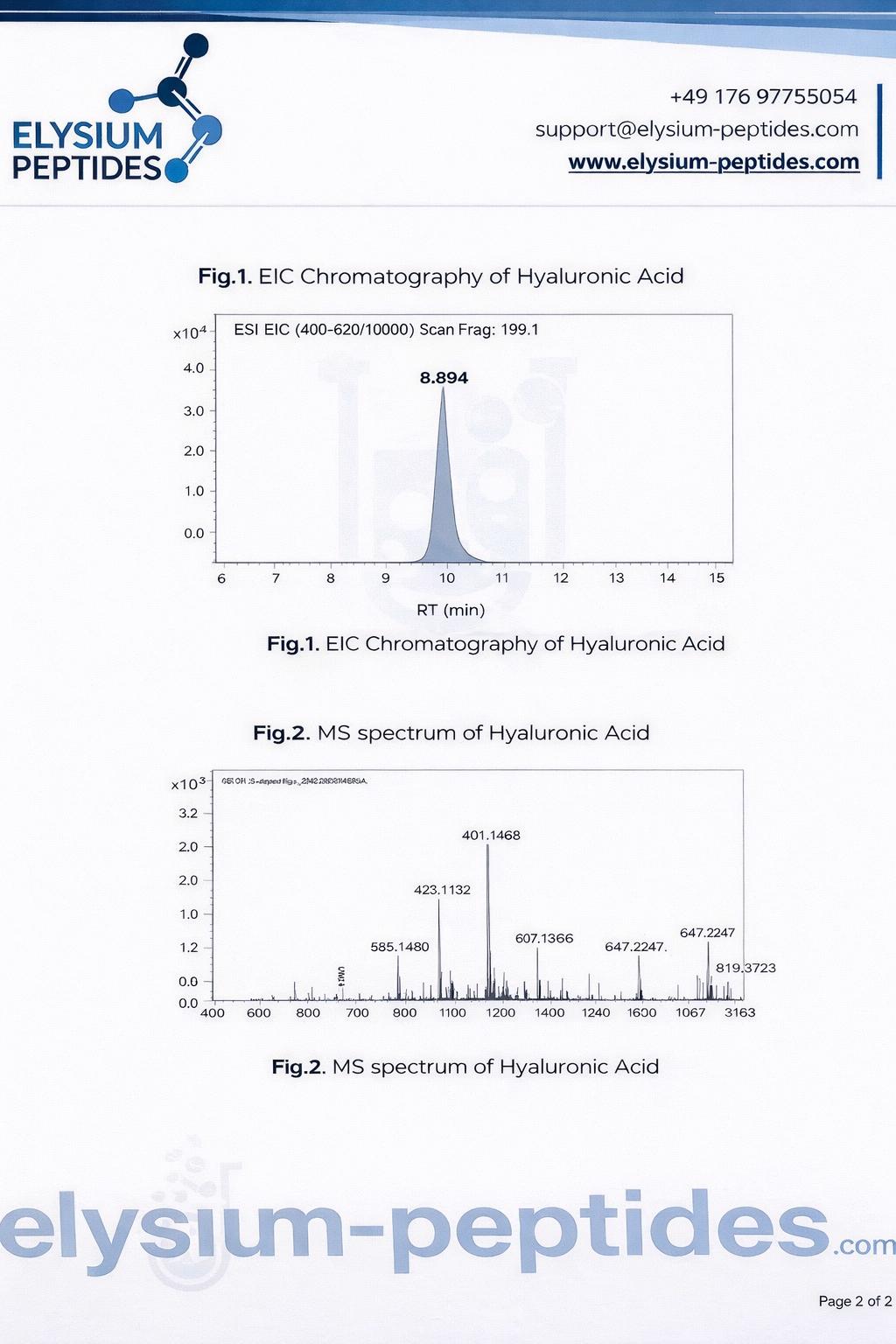
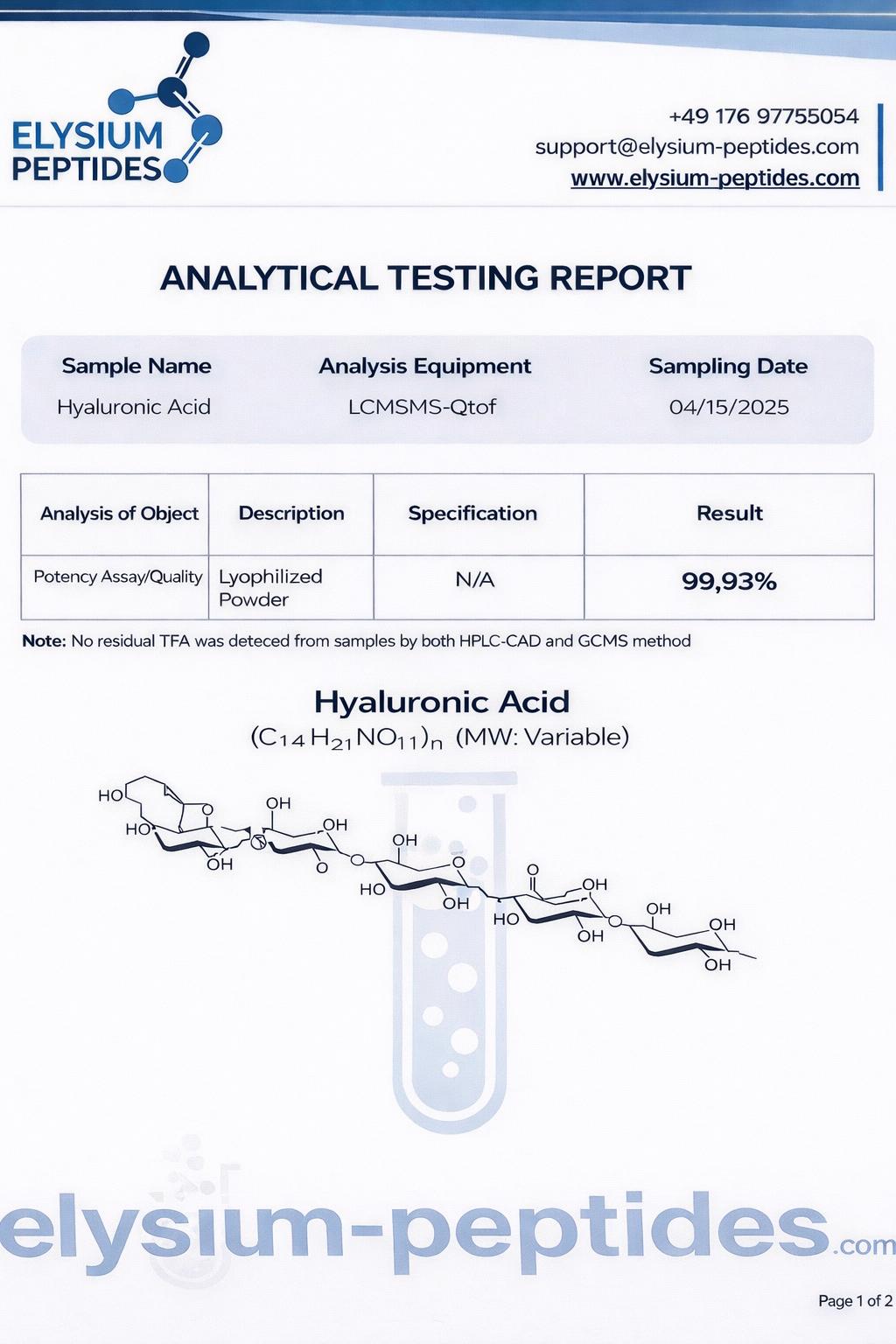
Purity: ≥99% (Research Grade)
Storage: Store in a cool, dry place; refrigeration (2–8°C) recommended after reconstitution.
Storage Instructions
Hyaluronic Acid should be stored in a cool, dry environment, with refrigeration recommended after reconstitution to maintain stability and integrity.
Research Disclaimer
This product is intended strictly for laboratory research and analytical purposes only. It is not intended for human consumption, medical use, or veterinary application. All research must be conducted by qualified professionals in controlled laboratory environments.
James Whitfield (verified owner) –
Hyaluronic Acid 5mg — batch ELY-HYA-2025-0315 verified at 99.1% via HPLC. 2-day delivery to Melbourne, AU. The 10-vial format is the most cost-effective option for extended research protocols. Quality is consistent with the published specification.
Batch #ELY-HYA-2025-0315Melbourne, AU
Daniel Forsythe (verified owner) –
Compared several suppliers before ordering Hyaluronic Acid 5mg from Elysium. Batch ELY-HYA-2026-0179 confirmed 99.2%. Delivery to Brisbane, AU in 3 days. The bulk vial pricing is the most competitive I have found for this compound.
Batch #ELY-HYA-2026-0179Brisbane, AU
Thomas Bellingham (verified owner) –
The HPLC data for batch ELY-HYA-2026-0213 was accessible before placing the order — 99.3% confirmed. Hyaluronic Acid 5mg arrived in 4 days to London, UK. This level of pre-purchase batch transparency is not available from any other supplier I have tried.
Batch #ELY-HYA-2026-0213London, UK
Callum Sheridan (verified owner) –
Ordered Hyaluronic Acid 5mg after verifying batch ELY-HYA-2026-0247 on the Elysium website. Purity confirmed 99.0%. Delivery to Sydney, AU in 2 days. The publicly available COA is what sets this supplier apart from every other option I have used.
Batch #ELY-HYA-2026-0247Sydney, AU
Patrick Drummond (verified owner) –
Verified the batch before ordering. Hyaluronic Acid 5mg purity confirmed 99.1% on the batch verification page before I committed. Arrived in 4 days to Perth, AU. The level of COA detail here goes well beyond what other suppliers provide.
Batch #ELY-HYA-2026-0281Perth, AU
Simon H. (verified owner) –
Second order. Consistent quality — 99.2% purity confirmed across both batches. Discreet packaging, fast tracked delivery from Melbourne. This is the standard I expect from a research supplier.
Batch #ELY-HYA-2026-0322Perth, AU
James T. (verified owner) –
Ordered to the UK — arrived in 4 days. Batch report confirmed 99.1% purity. More thorough HPLC documentation than most domestic UK suppliers provide. Will be ordering regularly.
Batch #ELY-HYA-2026-0308London, UK
Paul S. (verified owner) –
Best per-vial price in Australia for Hyaluronic Acid at this purity level. Second order — same quality as the first. Batch verification is a genuine differentiator. 99.3% confirmed. Melbourne to Brisbane in 2 days.
Batch #ELY-HYA-2026-0315Brisbane, AU
David M. (verified owner) –
Verified batch ELY-HYA-2026-0329 on the Elysium site before placing my order. Full HPLC-MS report confirmed 99.2% purity. Ordered, arrived in 2 days to Sydney. First order and already planning the next. Impressive transparency.
Batch #ELY-HYA-2026-0329Sydney, AU
Tom K. (verified owner) –
Third order of the 10-vial pack. Ran independent COA — 99.1% purity confirmed on batch ELY-HYA-2026-0341. Ships same day from Melbourne, arrives in 2 days every time. This is my permanent supplier for Hyaluronic Acid.
Batch #ELY-HYA-2026-0341Melbourne, AU